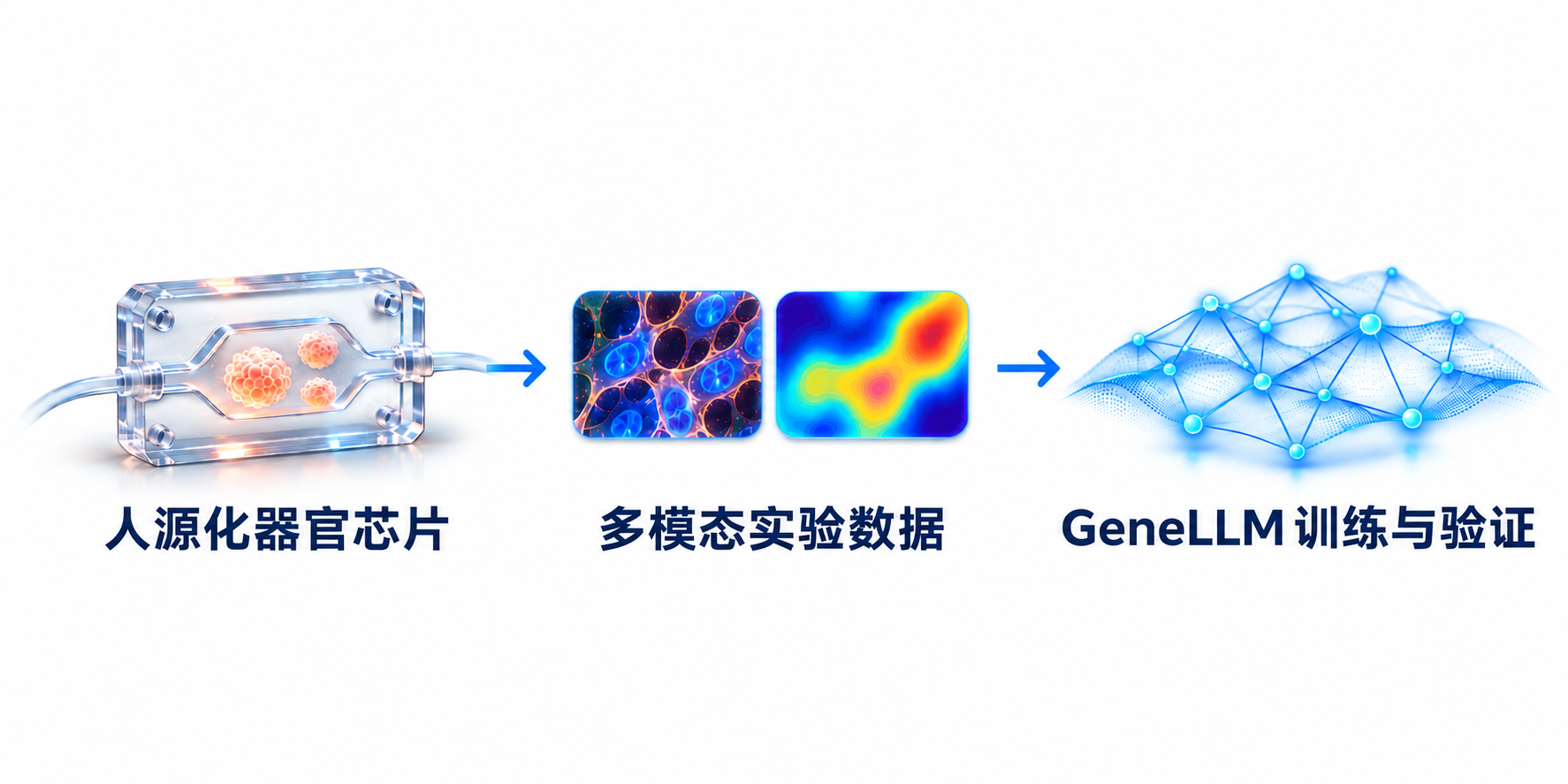
Recently, OxTium Technology and Xellar Biosystems signed a partnership agreement. The two parties will collaborate on combining human-derived data with multi-omics foundation models, exploring the use of multimodal experimental data generated by organ-on-chip platforms for the training and validation of GeneLLM.
Humanized Experimental Data
How It Supports Life Science Foundation Models
In disease mechanism research and drug discovery, researchers need both to understand the state of cells and tissues and to observe how they change under external factors such as drugs. For life science foundation models, data that maps experimental conditions to biological responses can be used both to learn response patterns under different conditions and as a basis for evaluating model performance.
Humanized organ-on-chip platforms provide a controllable in vitro experimental environment for this type of research. By simulating part of the microenvironment of human tissues, researchers can observe the responses of cells and tissues on chip. Combined with automated experiments and high-content imaging, experimental results can also be recorded at multiple levels, including cell morphology, tissue function, and molecular changes.
The application of organ-on-chip technology in drug discovery has also drawn regulatory attention. In 2025, the U.S. Food and Drug Administration (FDA) released a roadmap to reduce animal testing in preclinical safety studies, incorporating organ-on-chip platforms, computational models, and other approaches into the exploration of New Approach Methodologies (NAMs) and promoting the gradual adoption of scientifically validated methods in applicable settings.
Expanding Training and Validation
for the GeneLLM Biological Foundation Model
Xellar Biosystems was founded in Boston, USA, in late 2021 and focuses on the application of organ-on-chip and AI technologies in drug discovery and precision medicine research.
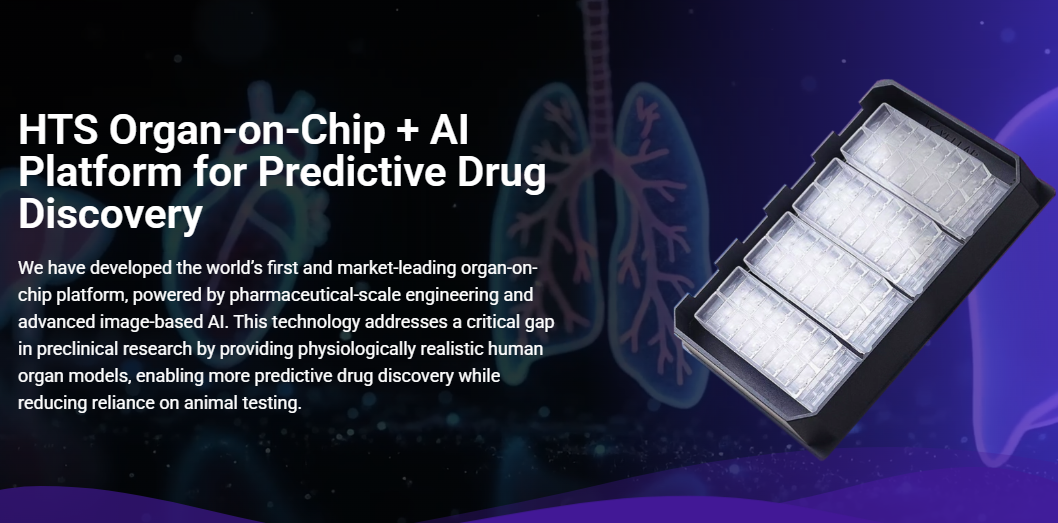
Its independently developed 3D Bio Intelligence technology system integrates humanized organ-on-chip platforms, high-throughput automated experiments, high-content 3D imaging, and AI analysis, enabling the observation and analysis of cellular and tissue responses under different conditions across multiple dimensions.
OxTium Technology focuses on the application of AI in life science research. Its independently developed multi-omics foundation model GeneLLM covers multiple types of biological information, including genomics, transcriptomics, proteomics, and metabolomics, and is used to explore associations among life science data at different levels.
This partnership will combine Xellar Biosystems' humanized organ-on-chip data with OxTium Technology's GeneLLM model development capabilities. The two parties will collaborate on multimodal experimental data generation, model training, and validation to expand the humanized experimental data foundation of GeneLLM.
Jin Yongcheng, Founder and CEO of OxTium Technology, said:
"Through our partnership with Xellar Biosystems, we are incorporating human-derived data into the training and validation of GeneLLM, strengthening the model's data foundation and increasing training intensity so that the model can better learn how complex biological systems respond under different perturbation conditions. We will also use the model's predictions to propose new experimental hypotheses, guide the next round of experimental design, and then feed validation results back into model training. By making each round of experiments and training inform the next, we will further strengthen OxTium Technology's Recursive Self-Improvement (RSI) model."
Xie Xin, Founder and CEO of Xellar Biosystems, said:
"Xellar Biosystems hopes to leverage its 3D Bio Intelligence technology system to combine experimental data that more closely reflects human biological characteristics with AI model development. We look forward to connecting humanized experimental data with model development through our technical collaboration, expanding the application of humanized organ-on-chip platforms in life science AI research."
Building on this partnership, the two parties will explore the application of humanized experimental data and life science foundation models in disease mechanism research and drug discovery.