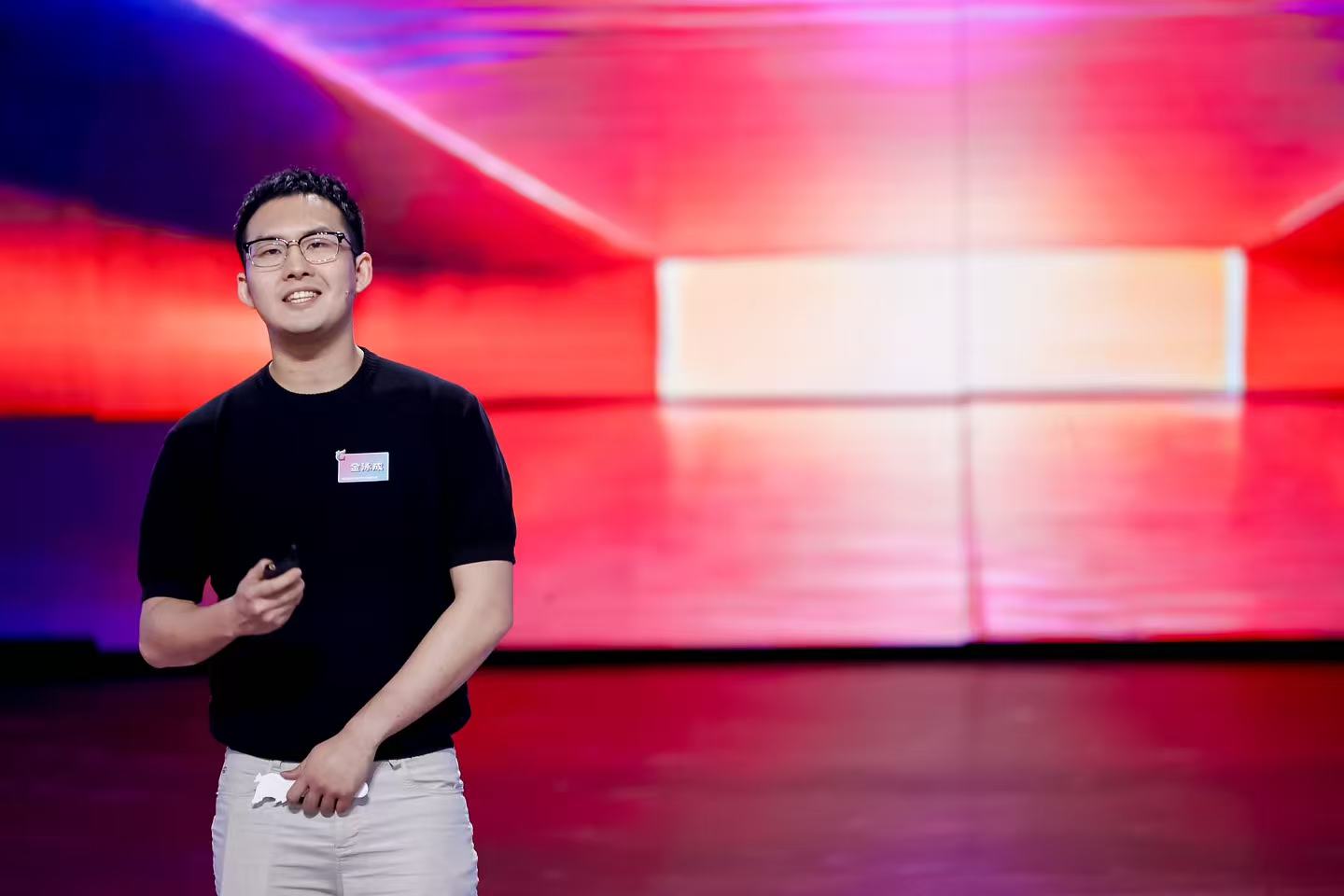
Recently, Jin Yongcheng, Founder and CEO of OxTium Technology, took part in the recording of China Media Group's "Youth Sci-Tech Innovation+" and achieved an outstanding result.
"Youth Sci-Tech Innovation+" is a large-scale documentary-style sci-tech innovation media event jointly created by China Media Group, the Ministry of Education, and the Nanjing Municipal People's Government. Through segments such as "Youth Innovation Face-to-Face" and "Youth Innovation Open Mic," the program brings together academicians, experts, and industry and investment resources, building a platform for youth sci-tech innovation teams to showcase their work, exchange ideas, and connect with resources.
Season one of "Youth Sci-Tech Innovation+" traveled to 10 cities across the country, attracted nearly 500 companies and sci-tech innovation teams to register, and ultimately brought together 100 youth innovators to participate in the program. OxTium Technology appeared as one of the outstanding project representatives and made it into the top four of season one.
This appearance once again drew attention from the research and investment communities to OxTium Technology, while demonstrating its comprehensive strength in AI for bioscience and adding authoritative recognition to the team's technological exploration and applied practice.
For the full video, please watch episode one of "Youth Sci-Tech Innovation+" on CCTV Video: https://tv.cctv.com/2026/10/12/VIDEQtg13TtZnnQayJ8NaPcg261012.shtml

From Design to Experiment
Closing the Loop on the Research Workflow
From generating experimental protocols to executing them in a real laboratory, obtaining data, and using the results to guide the next round of research, multiple stages must work together closely.
Jin Yongcheng explained that the team has built a scientific discovery loop around DBTL—Design, Build, Test, Learn. Through the coordination of five agents—literature, experimentation, scientific intelligence, experiment scheduling, and data analysis—they drive protocol generation, experiment execution, and results feedback to connect with one another.
"We want AI to understand not only data, but also the lab bench—so that the pace of innovation in the life sciences shifts from being measured in years to being measured in weeks."
On the program, one investor listed OxTium Technology as a project that left a deep impression and expressed optimism about the prospects of AI for Science. Experts on site asked in-depth questions about model innovation, engineering contributions, and practical applications.
Jin Yongcheng responded on two levels: at the foundation model level, the team independently conducts research on the architecture and training of biological and multi-omics foundation models, providing support for AI to understand and analyze life science data; at the engineering level, the team focuses on closing the DBTL loop and reducing manual handoffs between different models, tools, and experimental stages.
Developing model capabilities while also emphasizing how models enter real research workflows. Making each stage work together more smoothly is expected to help researchers reduce repetitive work and accelerate the progress of research projects.
Giving Scientists More Time to Explore
When the host asked Jin Yongcheng to explain in plain language how the project relates to ordinary people's lives, he spoke about OxTium Technology's vision: enabling scientists to one day step out of the laboratory.
Behind this vision is a way of thinking about how research is done: when more processes can be completed through the coordination of intelligent systems, scientists have the opportunity to reduce the time they spend on operations and handoffs, and devote more time to asking questions, understanding results, and exploring new directions.
From his research experience at the University of Oxford to bringing technology to life on the front lines of entrepreneurship, Jin Yongcheng has continued to focus on the same question: how can AI better support scientists in conducting research?
OxTium Technology will continue to advance the coordination of biological foundation models, research agents, and experiment execution, refining its products and applications around real research needs, so that AI truly enters the laboratory and frees scientists from repetitive labor.