On a winter day, the first snow fell in Beijing.
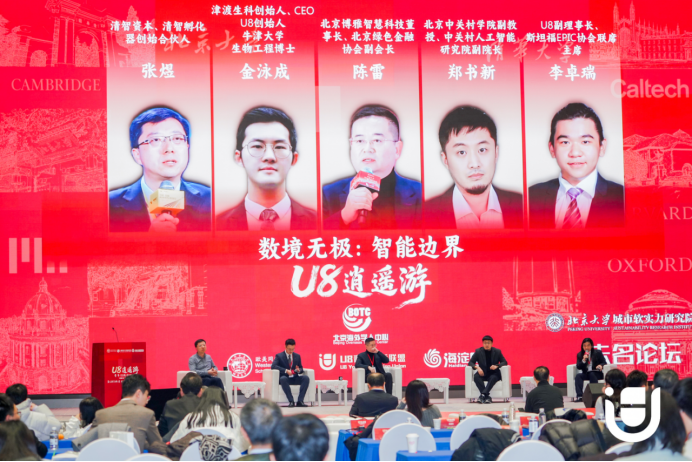
Recently, the "U8 Youth Innovation Forum · 2025 Annual Conference & GNIS New Quality Productive Forces International Cooperation Salon" concluded successfully in Zhongguancun, Beijing. The summit, themed "Xiaoyao You / Deep Well-being," brought together nearly a thousand top global scholars, industry leaders, and young elites. Jin Yongcheng, founder & CEO of OxTium Technology and co-founder of U8, organized the summit and showcased the company's core innovation—the OxTium BioFord Agent, a new research infrastructure that attracted widespread attention.
At the summit, Jin Yongcheng introduced OxTium Technology's flagship product, the OxTium BioFord Agent—a new AI for Science research infrastructure that revolutionizes the entire workflow from experiment design to output.
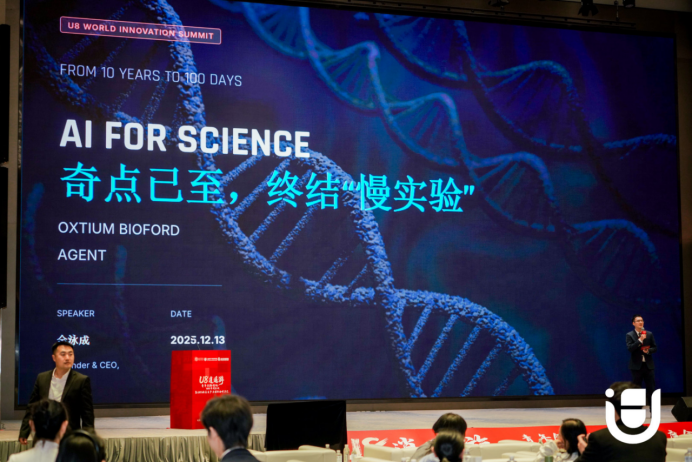
Unlike traditional research models where 75% of time is spent on repetitive operations, this agent can automatically complete experiment design, workflow decomposition, and parameter calculation with just a single command, improving research design efficiency by approximately 40%.
During the experiment execution phase, AI-powered intelligent scheduling and full-process monitoring completely free researchers from the inefficient task of "watching machines." In the data analysis stage, model inference and fine-tuning techniques enable complex analysis without training models from scratch, ultimately producing directly publishable and reusable research assets.
Currently, this solution has been deployed at a key laboratory in the Greater Bay Area, reducing manual operations by 30% and increasing equipment utilization by 25%, significantly shortening research cycles and validating the immense value of autonomous research with tangible results.
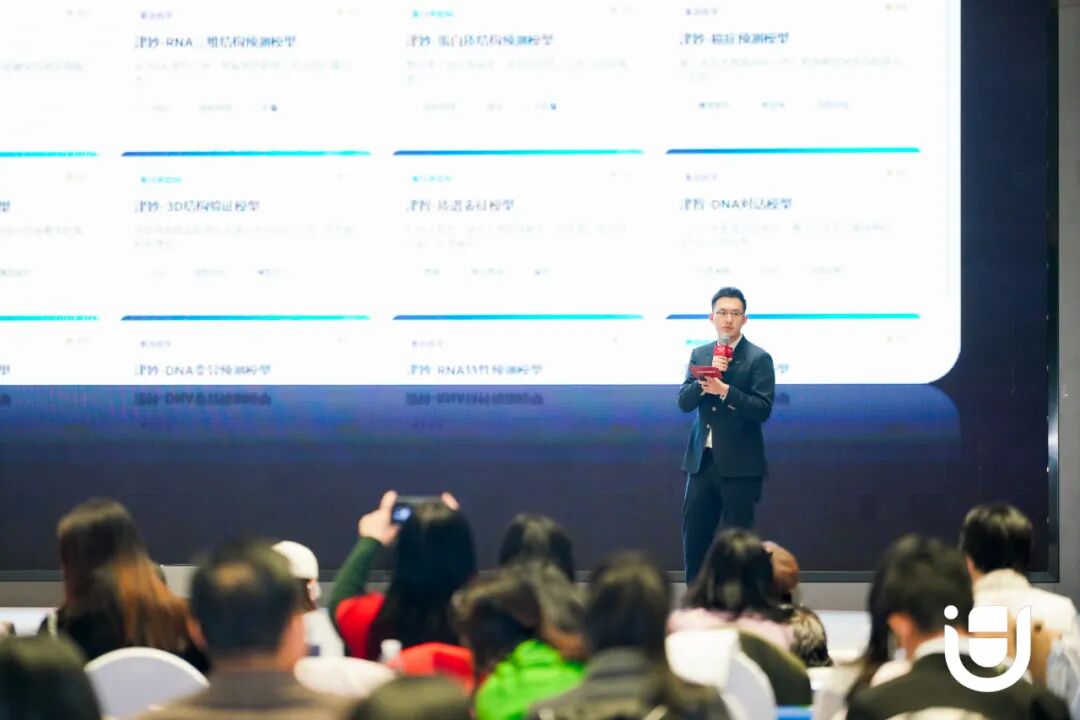
The core innovation of OxTium Technology lies in restructuring the research paradigm through technology, allowing researchers to spend 90% of their time on innovative thinking. This philosophy aligns perfectly with the summit's theme of "Xiaoyao You," which advocates mastering the laws of technology to achieve a state of calm and efficient innovation.
The summit featured "8 major content sections, 1 main forum + 2 sub-forums," bringing together over 30 distinguished guests including internationally renowned scholars, industry leaders, international organizations, and universities, attracting nearly a thousand young representatives from top global universities. The focus was on re-exploring human well-being in the age of technology and discussing how technology can achieve "Xiaoyao" (carefree freedom).
The summit invited several heavyweight guests to attend and speak, including Laurent Lafforgue, winner of the 2002 Fields Medal; Joseph Sifakis, winner of the 2007 Turing Award; and Wang Xiaodong, director of the National Institute of Biological Sciences, Beijing.
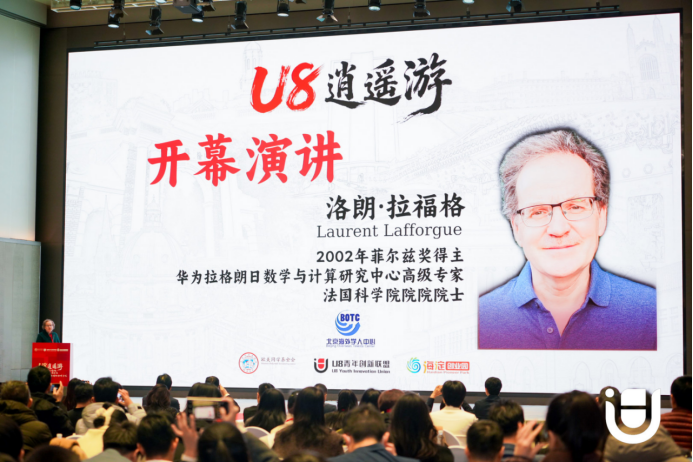
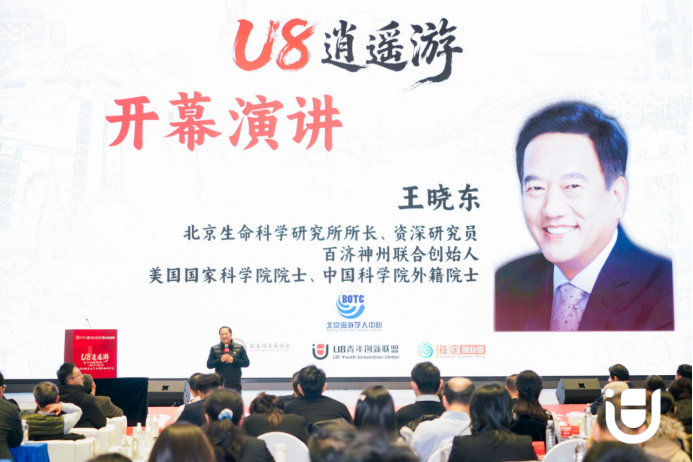
Scholars and young elites from dozens of world-renowned universities, including Tsinghua University, Peking University, Oxford University, Cambridge University, Harvard University, MIT, Stanford University, and Caltech, gathered together.
Looking ahead, OxTium Technology will continue to deepen its efforts in the AI for Science field, with the OxTium BioFord Agent at its core, continuously improving autonomous research infrastructure. By breaking through research efficiency bottlenecks with technological innovation, the company aims to accelerate the pace of great scientific discoveries and inject strong momentum into the development of new quality productive forces.